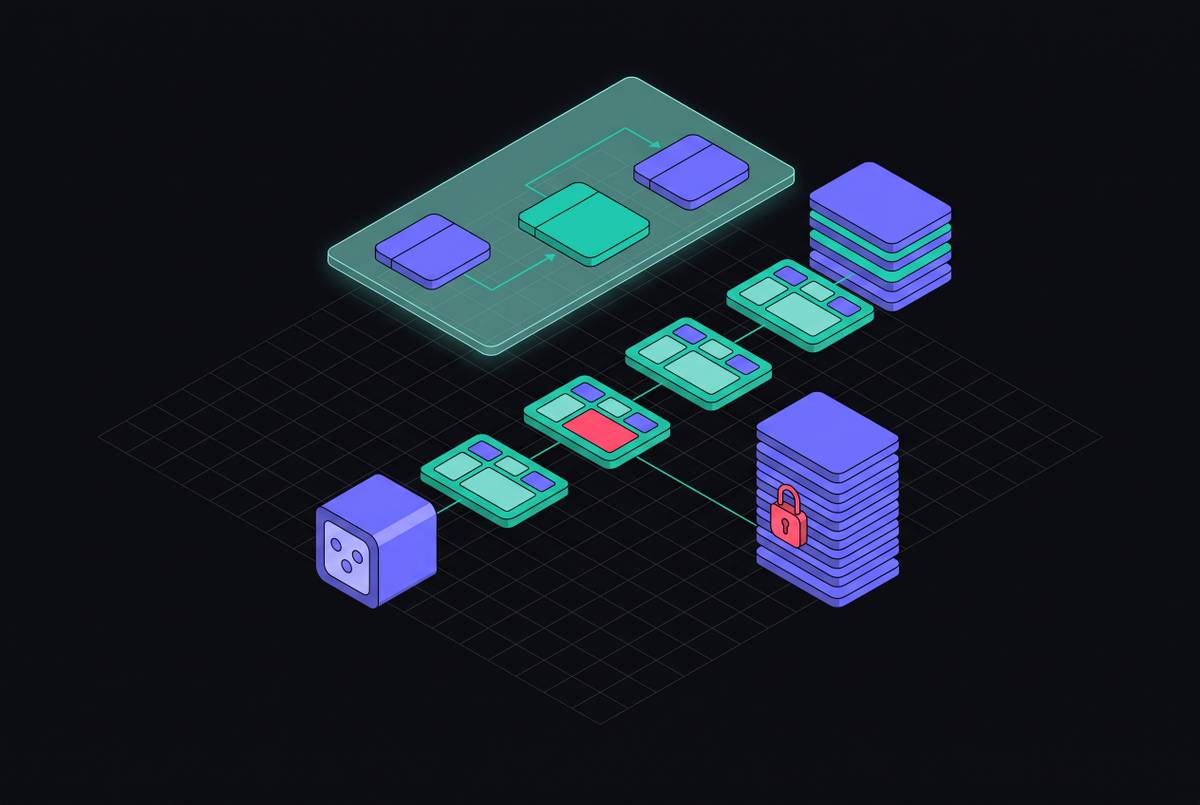
Audit Log Schema Design for AI Agent Action Trails
Tamper-evident audit logs require unified schema design upfront, not retrofitted tools.
Grant Larsen
14 stories
Tamper-evident audit logs require unified schema design upfront, not retrofitted tools.
Coverage-guided fuzzing uncovers dangerous agent interactions that conventional testing misses.
Attackers forge agent authority by injecting instructions through unverified context sources.
AI agents turn container images into runtime attack surfaces that static scanning cannot defend.
Hardening MCP servers requires OAuth, token exchange, and runtime checks beyond the spec.
Autonomous agents expose gaps in ISO/IEC 5338's process model that enterprises must close now.
Why gMSA, designed for Windows services, fails to secure AI agents spawned per session.
Connecting AI agent traces to business outcomes requires deliberate instrumentation strategy.
Deployment of AI agents is outpacing security frameworks built for human users.
AI agents need continuous permission checks, not role assignments made at login.
Autonomous agents need separate controls for how much they can do and what data they can touch.
Scope inheritance in agent chains outpaces OAuth's single-delegation design.
Agents need task-scoped permissions, not job titles.
AI agents can inherit permissions that compose into actions none were authorized to take.