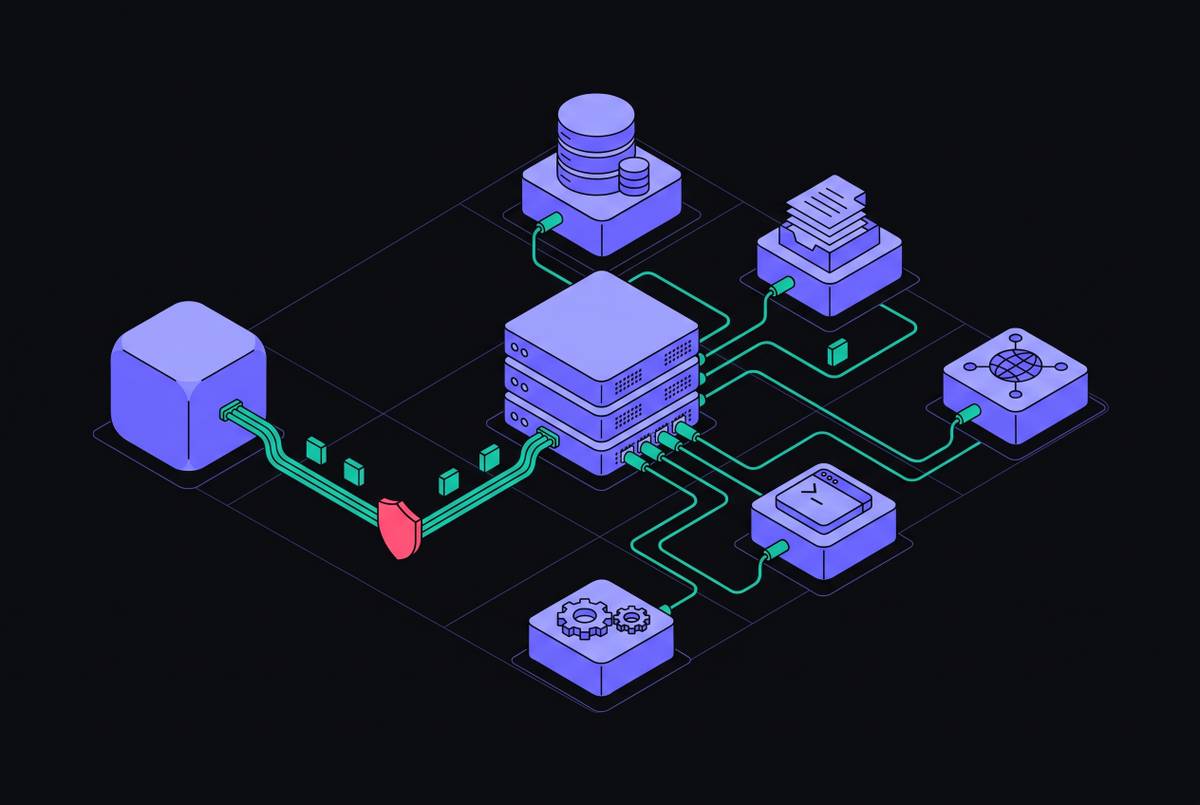
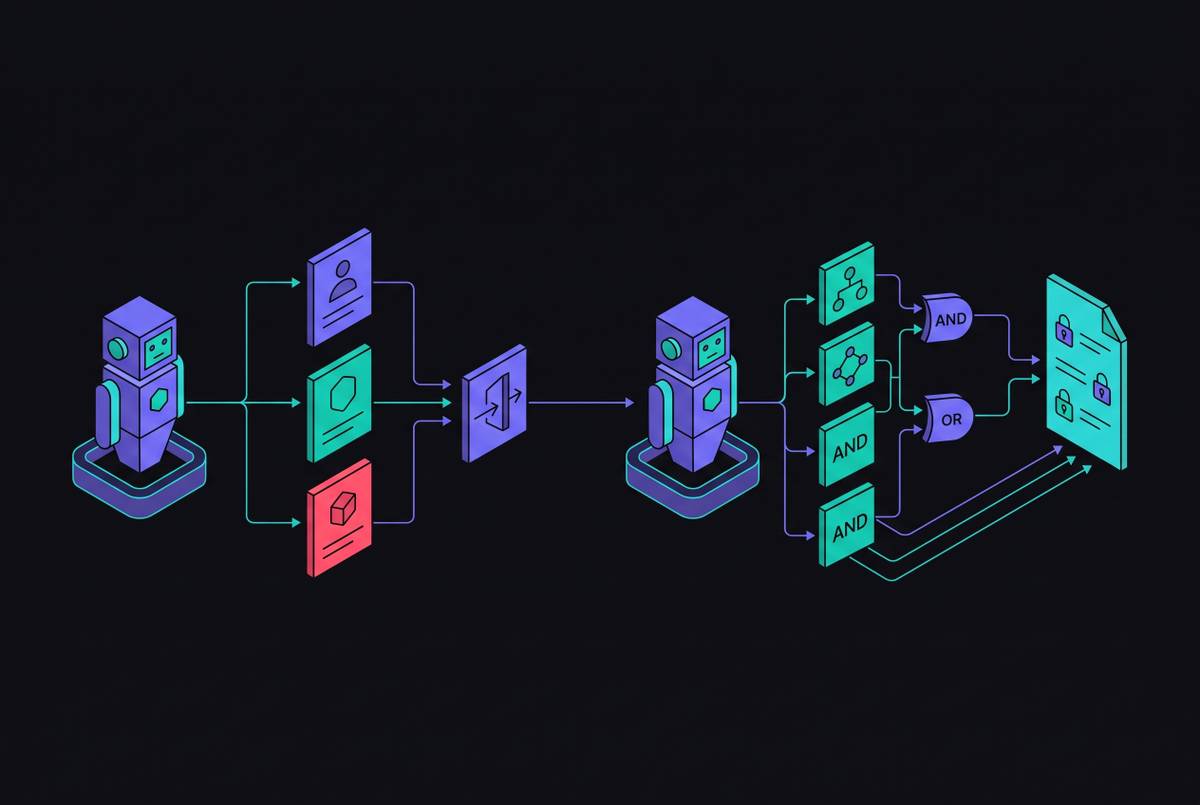
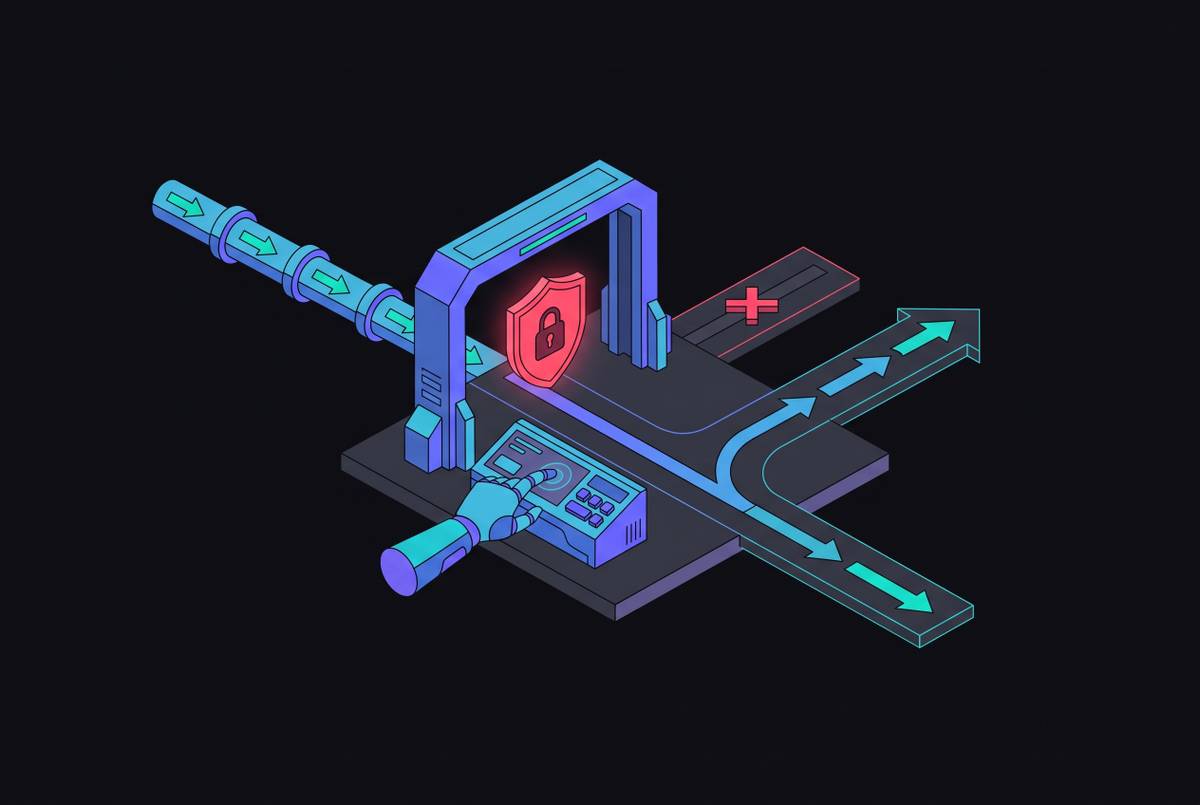
Audit Log Schema Design for AI Agent Action Trails
Tamper-evident audit logs require unified schema design upfront, not retrofitted tools.
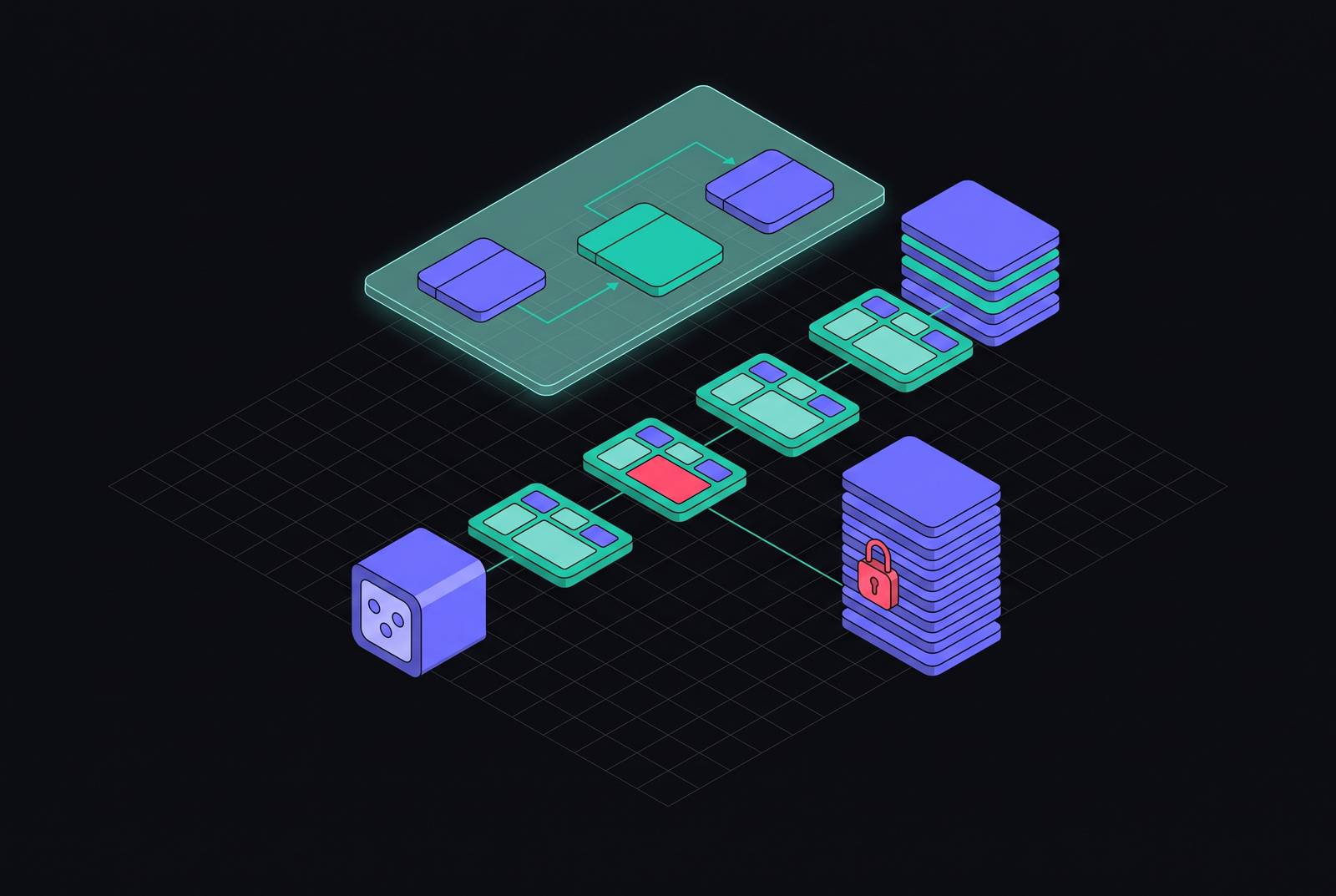
An audit log schema for AI agent action trails must let a third party reconstruct what an agent did, why it did it, and with whose authority. That requires more than better application logs. Trace-and-span structure, explicit decision and authorization fields, and tamper-evident storage must be designed together before production, rather than assembled after someone asks for evidence.
Why agent action trails demand a different schema than application logs
Who reads this record? An application log serves the engineer diagnosing a broken service, while an agent audit trail serves an auditor, regulator, or legal team verifying a behavior. The engineer can bring knowledge of the code to a semi-structured message. The auditor needs the record to stand alone. That difference calls for a schema with rules that are strictly enforced, because free-form text can leave readers needing to find the person who wrote it to learn what it means.
Agents expose three gaps in ordinary diagnostic records. A tool call may lack a link to the original user intent, an API invocation may omit the decision behind it, and a generic service account may conceal whether agent logic or a human override caused the action. Non-determinism makes it harder to fill those gaps. An agent can solve the same problem five different ways across five sessions, so replay does not reliably reconstruct the original run. Free-form logs cannot expose logic drift or hidden prompt injection without the contextual chain needed to interpret the behavior.
The trace-and-span model as the structural foundation for agent trails
A trace represents the complete lifecycle of one agent task, while spans capture its individual operations. The trace follows goal interpretation, planning, tool calls, memory lookups, intermediate outputs, and the final decision. A span records an LLM invocation, vector search, system API call, or policy check as a discrete event. The log line is no longer the organizing unit. The task and its connected actions are.
This structure requires a shared trace_id across the run and a span_id for each operation. A stable agent_id, rather than a session identifier, supports attribution across time, while agent_version identifies the model and agent code in effect. Timestamps should use UTC, ISO 8601, and millisecond precision. OpenTelemetry provides a practical basis for this structure because portability avoids tying the trail to one observability backend.
The 2026 Singapore Consensus on Global AI Safety Research Priorities names Auditability as Principle 3 and calls for logging inputs, tool invocations, parameters, outputs, outcomes, and reasoning traces.
Mandatory schema fields that make an agent trail reconstructable
The schema needs explicit fields for the acting agent and version, its parent agent, the action type, and the trigger that identifies what prompted it and on whose behalf. Action types include retrieval, LLM calls, tool invocations, approval decisions, and external writes. Inputs need set places for prompts, retrieved documents with version pointers, and tool arguments, all under the privacy controls discussed below. Model metadata includes provider, model name, model version, parameters, and response. Names alone are not enough for historical reconstruction.
The decision trace and policy outcome deserve particular attention because they are easy to omit. The former records the steps and context used at each stage, while the latter records which guardrails were evaluated and whether any fired. The record must also identify every system touched and whether access was permitted. Human intervention needs approver identity and approval context, including what the approver saw and whether they edited the draft. External-effect fields establish whether anything left the system and what response came back.
Each entry also needs an immutable event ID, a wall-clock timestamp, a substrate-internal sequence number, and a chain hash linking it to the previous record. Proposals and executed effects must remain separate linked events so that a reversal path can be reconstructed. Document and policy version pointers preserve what applied at the time, even after the underlying material changes. Missing required fields cannot be quietly accepted. A fixed schema that rejects non-conforming entries is also what makes predictable exports possible.
Identity and authorization as the foundation of attributable logs
Even a complete record has little forensic value if its actor is merely a broad service account. Every agent needs a distinct non-human identity with lifecycle governance, scoped permissions, and verifiable authentication represented in the log. Authentication must bind the action to that identity. Otherwise, the trail can describe an operation precisely without establishing who was responsible for it.
Identity dilution occurs when an agent forwards a bearer token unchanged or replaces user context with a broad service credential. The downstream system records the identity it receives, leaving a gap between that identity and the human-authorized task that engineers intended it to represent. In the Singapore Consensus, Traceable Identity is Principle 2. A Cloud Security Alliance/Strata survey found that only 28% of organizations could trace agent actions to a human sponsor across all environments.
Authorization shows how an identity is tied to permission. When a policy decision happens at every hop, logging each decision leaves a history of how the policy was enforced. A separate, optional logging path can leave gaps at the same boundaries where enforcement is weak. Both belong on the same critical path. The policy-check record is only as reliable as the enforcement point that generated it.
Tamper-evident storage and why append-only is a structural requirement, not a setting
An auditor needs evidence that the record still represents the action as it occurred. Access controls alone cannot establish that history if stored entries remain mutable. Structural append-only storage prevents ordinary revision, while cryptographic chaining makes changes detectable by linking each record to its predecessor. Editing a past entry breaks that chain. The chain-hash field is therefore a required part of the evidence model.
Tenant isolation also belongs below application code. Row-level security, per-tenant schemas, or per-tenant databases avoid relying on a tenant filter that every developer must remember. The engineering test is straightforward. If a query omits that filter, it should return nothing or fail to prevent disclosure of another tenant’s trail. “Code review catches that” Code review catches that” is a process commitment.
Hot storage holds recent records that are under review, warm storage handles medium-term operational queries, and cold storage keeps records for multi-year retention so that everything need not stay in the most expensive tier. Without that separation, cost pressure can become pressure to discard history. Even durable, tamper-evident records are incomplete if they cannot keep track of identity across a multi-agent workflow.
How multi-agent workflows break the identity chain and what the schema must do to preserve it
A single external write may pass through an orchestrator, a sub-agent, a retrieval agent, and a tool adapter. Every hop can have a valid identity while the final entry still lacks a link to the human-authorized task. The schema must propagate that context through each handoff.
Concurrency makes timestamps insufficient for another reason. Agent A’s decision at T may depend on Agent B’s output at T-1, which itself depends on Agent C’s tool call at T-2. A flat log records the sequence but not the influence. Parent-child span relationships show the causal chain, and a shared trace_id links every agent that takes part to the root task. Each span must identify its executing agent, its inherited trace context, and its parent_agent where an orchestrator invoked it.
The Singapore Consensus names Multi-Agent Stability as Principle 6, so its concern reaches beyond single agents. The proposed federated pattern joins the log segments from each organization through a shared identity layer and trace ID, and each participant signs to provide tamper evidence. Each organization preserves its own segment. Joining those segments requires agreement across the boundary as well as compatible fields.
Redaction and privacy without destroying forensic utility
The completeness an AI Act auditor wants can conflict with the limits GDPR, HIPAA, and FADP place on retaining personal data. Logging everything is not a safe resolution. Suppressing an entire prompt or tool response is not one either, because it removes the context needed to interpret the action. Field-level redaction offers a narrower approach by hashing or masking structured PII fields while preserving non-PII context.
In production, logging should therefore be set to record only metadata by default. Full prompts and tool content should be opt-in, short-lived, access-controlled, and aggressively redacted, with the opt-in reversible without losing the metadata trail. Tool I/O logging should use an allowlist first, with redaction transforms in both the SDK and collector. Multiple boundaries need protection because agents combine prompts, memory, tool results, retrieved chunks, and service handoffs.
“Redaction theater” shows how the design can fail. An engineer adds a raw LLM prompt to an OpenTelemetry span while debugging latency, then leaves it there. The transcript viewer displays asterisks, but the observability backend retains the full content. Redacting at the field level preserves the structure needed for compliance queries and the regulator-specific exports that follow.
Regulatory requirements the schema must be designed to satisfy from day one
Regulatory obligations map to fields already identified, rather than to a separate narrative written after deployment. High-risk classification depends on what the system does. Annex III covers activities including credit scoring, resume filtering, healthcare-benefit decisions, life and health insurance pricing, and emergency-call triage. The activity determines the design constraint. Calling the system an assistant does not supply a different record of its behavior.
Regulation (EU), the AI Omnibus, entered into force in late July 2026, moving the high-risk compliance deadline to late 2027 for stand-alone systems and early August 2028 for systems embedded in regulated products. There is no final technical standard for Article 12 logging yet. The drafts in discussion are prEN 18229-1 and ISO/IEC FDIS 24970.
GDPR right-of-access requests need tenant-scoped entries that involve the data subject, with clear labels for the source documents and agent actions. This needs data-subject linkage across documents and sessions. FINMA review requires in-scope actions, named-owner sign-offs, grounding documents, and the policy versions in effect, which makes approval context and version pointers essential. HIPAA breach notification requires interactions with affected records, their access paths, and the relevant time window. Those requirements depend on distinguishing what an agent saw from what it did.
A basic export should be a one-line operation retrieving every model call made on behalf of tenant X between dates A and B. If a twelve-month request instead takes three days of grep and a written apology, the system still has application logs.
What a schema designed for auditors looks like in production
Every agent action is logged by default, no configuration can turn logging off, entries are tenant-scoped, and exports are in the required format. The implementation pattern includes code-first registration at deployment, automated traceability across cloud and ML platforms, and policy enforced as code. Nothing should operate outside the trail. The evidence then records permission as part of execution.
A sample entry for a real agent action shows whether it has decision and authorization context, while a SOC 2 or GDPR export tests whether those fields give auditors the evidence they need. An attempted edit of a past entry tests the storage guarantee. Platforms such as Oso offer one approach by combining mandatory runtime policy checks with immutable logging, so guardrails and access controls act before an agent exceeds its authorized scope. In that design, the trail is a byproduct of authorization decisions rather than a separate pipeline that can drift away from enforcement.
The practical decision belongs before the first agent reaches production. Teams should establish the schema, identity propagation, privacy boundaries, and storage guarantees then, because later instrumentation cannot recover context that was never recorded. A regulator’s letter is a bad time to start a schema migration.