Cross-Functional Agent Deployment Across Business Units
Most companies deployed agents first and built governance later, leaving billions on the table.
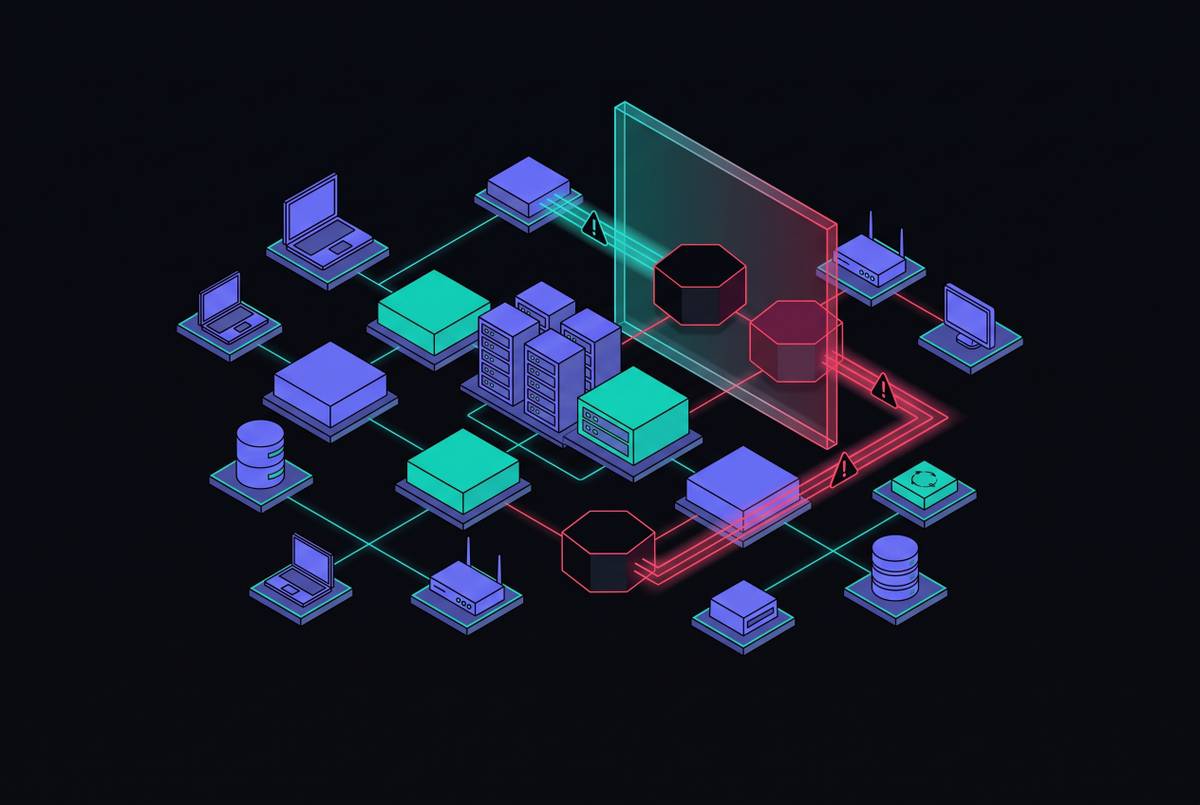
Cross-functional agent deployment is a coordination problem, and most companies are solving it backwards: they scaled the technology before they built the plumbing to govern it. Industry research puts the share of organizations that have deployed AI agents at some level around 79%, yet fewer than 10% have scaled them into something that actually moves the P&L. That gap, between switching something on and getting paid for it, is worth sitting with for a second, because it explains almost everything that follows.
A 2026 CEO survey of 4,454 executives found only 12% report both revenue gain and cost reduction from AI. Wide adoption, thin payoff. Trace the reason back far enough and you land on how these systems got built in the first place: early deployments were siloed by design. A department stood up an isolated chatbot, or a script that automated one task, and it stayed in its lane like a good employee. Nobody had to plan for an agent that needs to touch the CRM, the ERP, a compliance database, and a customer-facing system in the same afternoon. Now they do, and that shift from isolated tool to connected actor is what breaks the old playbook.
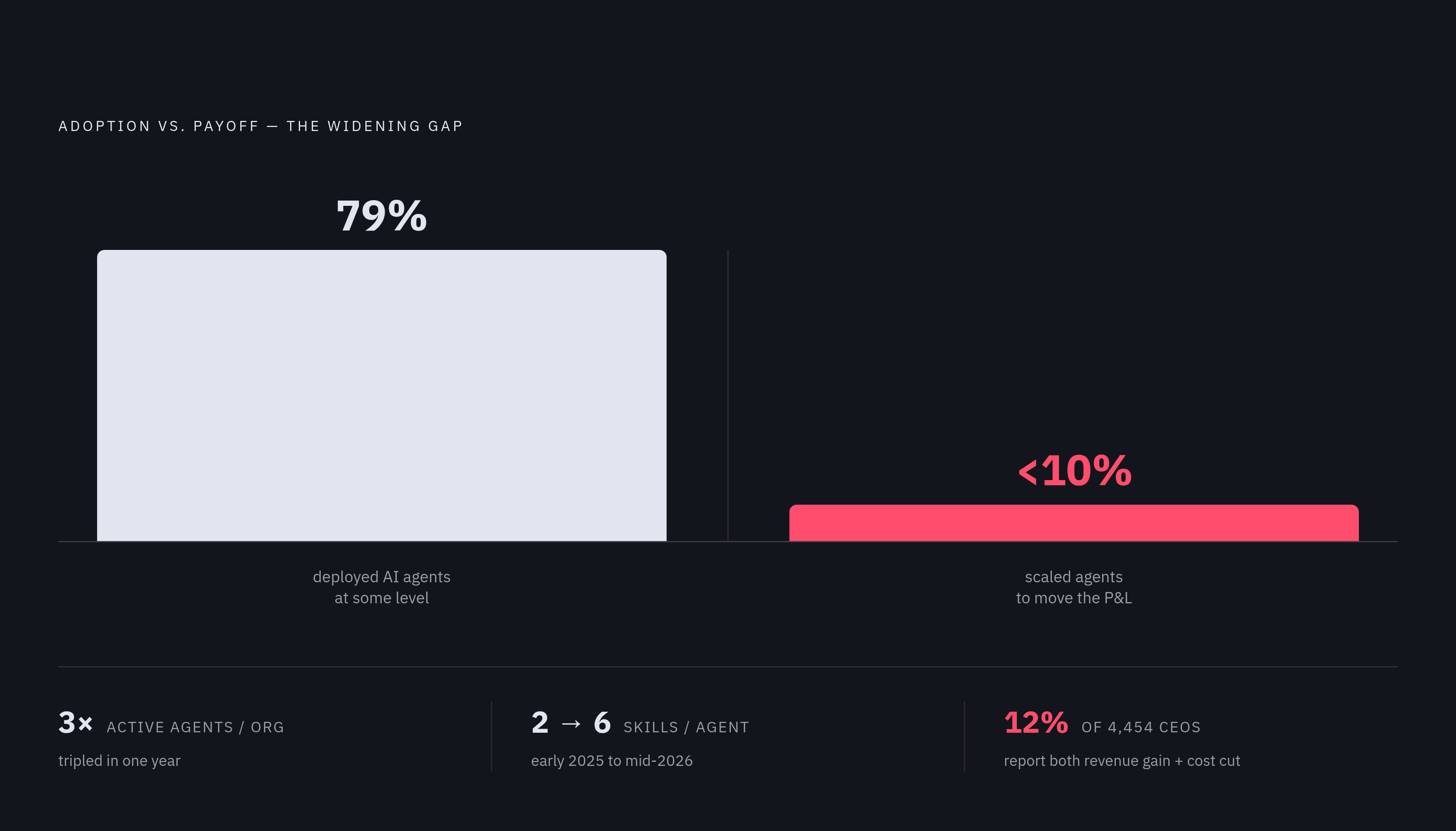
How fast agent deployment is actually spreading across business units
The numbers move faster than most governance teams can read them. Salesforce's 2026 Agentic Enterprise Index found the average number of agents active per organization nearly tripled over the past year, and the average agent's skill count went from two at the start of 2025 to six by mid-2026. Eighteen months, tripled capability. Agents are getting more capable faster than anyone is writing the rules for them, which is a sentence that should worry more people than it currently does.
Gartner logged a 1,445% jump in multi-agent system inquiries between Q1 2024 and Q2 2025, which tells you enterprise architects are past the experimentation stage and into real infrastructure design. Agent creation among first-mover companies grew 119% in the first half of 2025 alone. Gartner projects that by the end of 2026, 40% of enterprise applications will run with task-specific AI agents built in, up from under 5% in 2025. Whatever pace you think your organization is moving at, a chunk of your competitors are already past it.
Why each business unit is a different deployment problem
Here's the mistake: treating cross-functional deployment as one deployment, copied and pasted across departments. Each business unit runs different workflows, needs different data, and tolerates a different amount of risk. An agent that works fine in marketing will get someone fired if you drop it into finance unchanged.
Finance is the obvious high-stakes case. Agents fit naturally into cash flow analysis, transaction automation, and decision support, but the accountability bar is unforgiving: every action needs an audit trail, access has to be locked down tight, and errors have to trace back to a cause. A mistake in finance shows up on a balance sheet, not a satisfaction survey.
Supply chain is a different animal, because it's cross-unit by nature. Procurement, logistics, and customer service all have to move together or nothing moves. Agents coordinating robots, sensors, and supply chain systems in real time represent one of the fastest-growing deployment patterns out there. The agents don't respect functional boundaries, because the problem they're solving doesn't either.
HR runs slower and more deliberately. Some organizations have scoped their HR helpdesk agent first, measured what it actually did, then turned the results into a template to reuse for adjacent workflows instead of deploying everywhere at once. Organizations running HR agents report meaningfully faster time-to-hire, which is real money. But HR also holds personnel records and compensation data, so access governance matters as much here as it does in finance.
IT and engineering are already saturated. Engineering is already among the most saturated functions for AI agent use. That's the function that builds everything else, so agent maturity in engineering becomes everyone else's head start, whether the rest of the org realizes it or not.
Retail and other customer-facing industries run a different game: high volume, narrow task scope, less of the tangled business logic you find in regulated industries. But scope still expands under pressure. By mid-2026, the average agent handles six distinct skills, triple its capability at the start of 2025. Put an agent under load and it grows teeth it didn't show you in the demo.
A governance model built for one function does not transfer cleanly to the next. Cross-functional deployment needs a framework loose enough to hold all of this variation at once, not a single template stretched thin over five different jobs.
Choosing an architecture for agents that work across unit boundaries
Three architectural patterns dominate right now, and picking one is a decision that determines how hard governance gets later. Nobody tells you that part upfront.
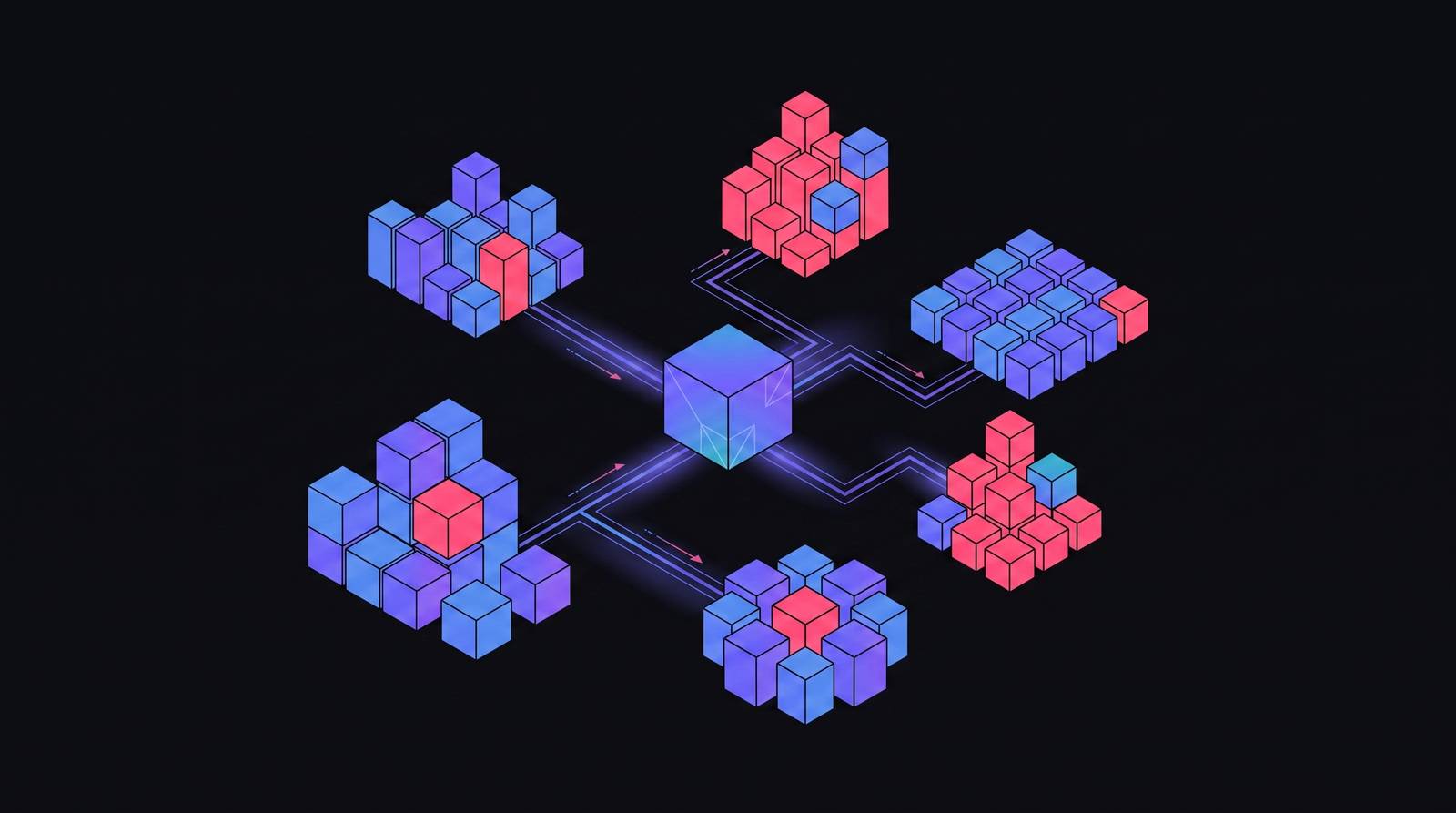
Hub-and-spoke puts a coordinator agent in the middle, routing tasks out to specialists: billing here, returns there, escalation somewhere else. It suits workflows with one clear decision point and cleanly defined specialist domains, and it's the easiest of the three to govern, since visibility concentrates at the orchestrator.
Hierarchical architecture uses manager agents to coordinate domain specialists spread across geography or org charts. One manufacturing deployment across 47 facilities ran 156 specialized agents in this pattern and, per Terralogic's 2025 Multi-Agent AI Systems Business Impact Analysis, cut equipment downtime by 42%, maintenance costs by 31%, and lifted production efficiency by 18%, for a 312% ROI. It scales well for complex enterprises, but every added layer adds inter-agent dependencies someone has to watch.
Flat mesh, or peer-to-peer, skips the coordinator and lets agents talk directly to each other. Lower overhead, fine for smaller or lower-volume workflows. But there's no single chokepoint to audit, which makes it the hardest of the three to keep an eye on.
The enterprise-focused agentic AI segment is growing rapidly, with a projected 46.2% compound annual growth rate through 2030. Two-thirds of the agentic AI market already runs on coordinated multi-agent systems rather than single agents working alone. Whichever pattern you pick, you're also picking the monitoring burden that comes bundled with it.
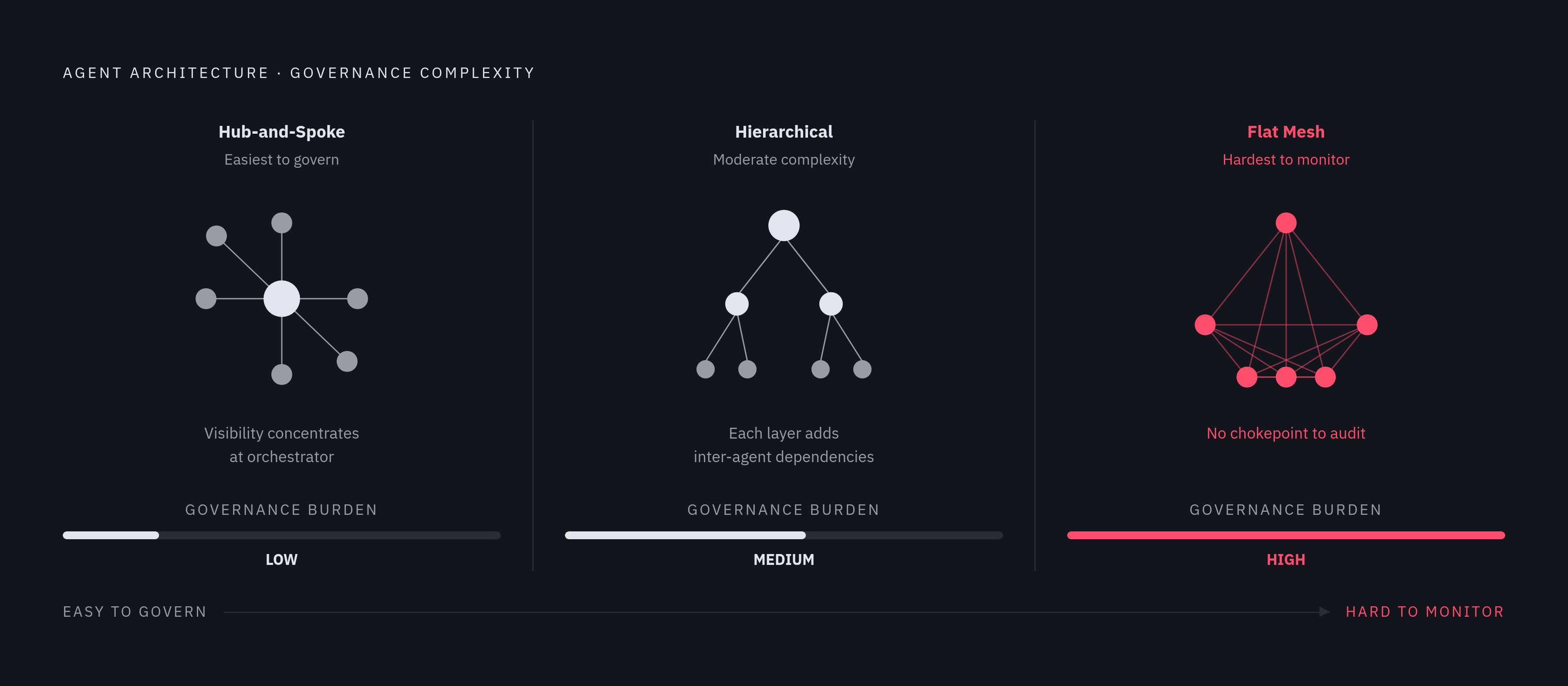
The interoperability layer that makes cross-unit agents possible
Agents built by different teams, on different frameworks, still have to talk to each other reliably, and that can't get bolted on after launch. Two open standards have become the backbone here.
Model Context Protocol, or MCP, standardizes how an agent plugs into outside tools, data sources, and services, and has seen rapid adoption across major AI platforms. Think of it as a wall socket: it doesn't care what appliance you plug in, as long as the plug shape matches.
Agent-to-Agent Protocol, or A2A, came from Google in April 2025 and moved to the Linux Foundation two months later. It standardizes how agents find each other, talk, and coordinate regardless of what framework built them. People call it "HTTP for AI agents," which undersells it slightly but gets the point across. It hit version 1.0 in April 2026 and now has over 150 organizations behind it.
These interoperability standards are converging into a coherent stack for cross-agent and cross-tool communication. Picking frameworks that support MCP and A2A now is cheap insurance against rebuilding a fragmented architecture later, once the agent count makes rework painful instead of routine.
How to sequence a cross-functional rollout without spreading governance thin
AMD's approach is worth repeating, because it's a sequencing model, not just an HR story: scope one function, measure what it actually does, then turn it into a reusable template for the next workflow instead of deploying everywhere at once.
Sequencing matters because of how access works. Agents inherit whatever privileges the accounts and systems they're granted give them, and rolling out across several business units at the same time multiplies that access surface before anyone has figured out what "normal" agent behavior even looks like. Start with the unit where the workflow is best understood, the data footprint is narrowest, and a mistake is recoverable rather than catastrophic. Get that deployment fully instrumented before adding the next one. Then use what you learned, the access policies, the escalation rules, the audit trail patterns, as the starting template for whatever comes after.
Research identifies a small group of high performers where AI contributes meaningfully to EBIT, and these companies share a common trait: disciplined sequencing rather than speed for its own sake. Google Cloud's 2025 ROI of AI Report backs this up from a different angle: 74% of executives report hitting ROI within the first year, and 39% have already deployed more than 10 agents across the enterprise. Those numbers only hold up if the agents are doing what they're supposed to, and uncontrolled sprawl is the fastest way to undo that.
What governance actually needs to cover when agents operate across business units
Technology leaders broadly recognize governance as extremely important for agentic AI, and yet governance still gets treated, in practice, like a checkbox exercise instead of something that runs the system day to day.
The real problem is access. Agents inherit human-scale permissions, then act on them at machine speed, across every system they've been let into. An agent scoped to finance that also happens to have HR access, because the human account it was built on top of had that access, is a data exposure problem waiting for a Tuesday. Governance has to define permissions at the agent level, not inherit whatever the underlying user account already had lying around.
In practice, that means a running inventory of every agent operating anywhere in the organization, because shadow agents that individual teams spin up without IT's knowledge are a growing and largely invisible risk. It means rules that define what each agent can and can't do, enforced while it's running, not configured once at launch and left to rot. It means the ability to notice when an agent starts acting outside its intended scope, measured against a baseline for that specific agent rather than buried in aggregate system logs. And it means complete, tamper-evident records of every action an agent takes, tied to the agent, the task, and the business unit it worked in.
Governance handled platform by platform, rather than as one unified layer, creates mounting security, cost, and operational headaches as agent counts climb. Logging what an agent did after the fact catches problems late; catching a violation before it finishes takes something more. Production-scale governance needs both, and most organizations currently have neither.
What the financial and operational return looks like at scale
Organizations project an average ROI of 171% from agentic AI deployments, with U.S. enterprises specifically forecasting 192%. Reported cost savings across operational workflows run 26 to 31%, which tracks with McKinsey's broader research on what happens when operations get redesigned around AI. Multi-agent systems, according to research from agentsindex.ai, deliver 25 to 45% better process optimization than single-agent setups.
The named examples make the abstract numbers concrete. Leading enterprises across finance, consumer goods, and retail have reported substantial documented savings from agent deployments, spanning operational costs and meaningful reductions in processing time. On the back-office side, organizations report cutting time-to-hire by roughly half.
None of it happened by luck. Every one of these returns came from a deployment scoped narrowly at first, governed tightly from day one, and expanded in stages rather than all at once. The governance work in the previous section is the reason the ROI shows up at all. Adoption stopped being the open question a while ago; the numbers above settle that. What's still unsettled is whether the plumbing, the access controls, the monitoring, the sequencing discipline, gets built at the same speed as the agents themselves. For most companies, right now, it doesn't.